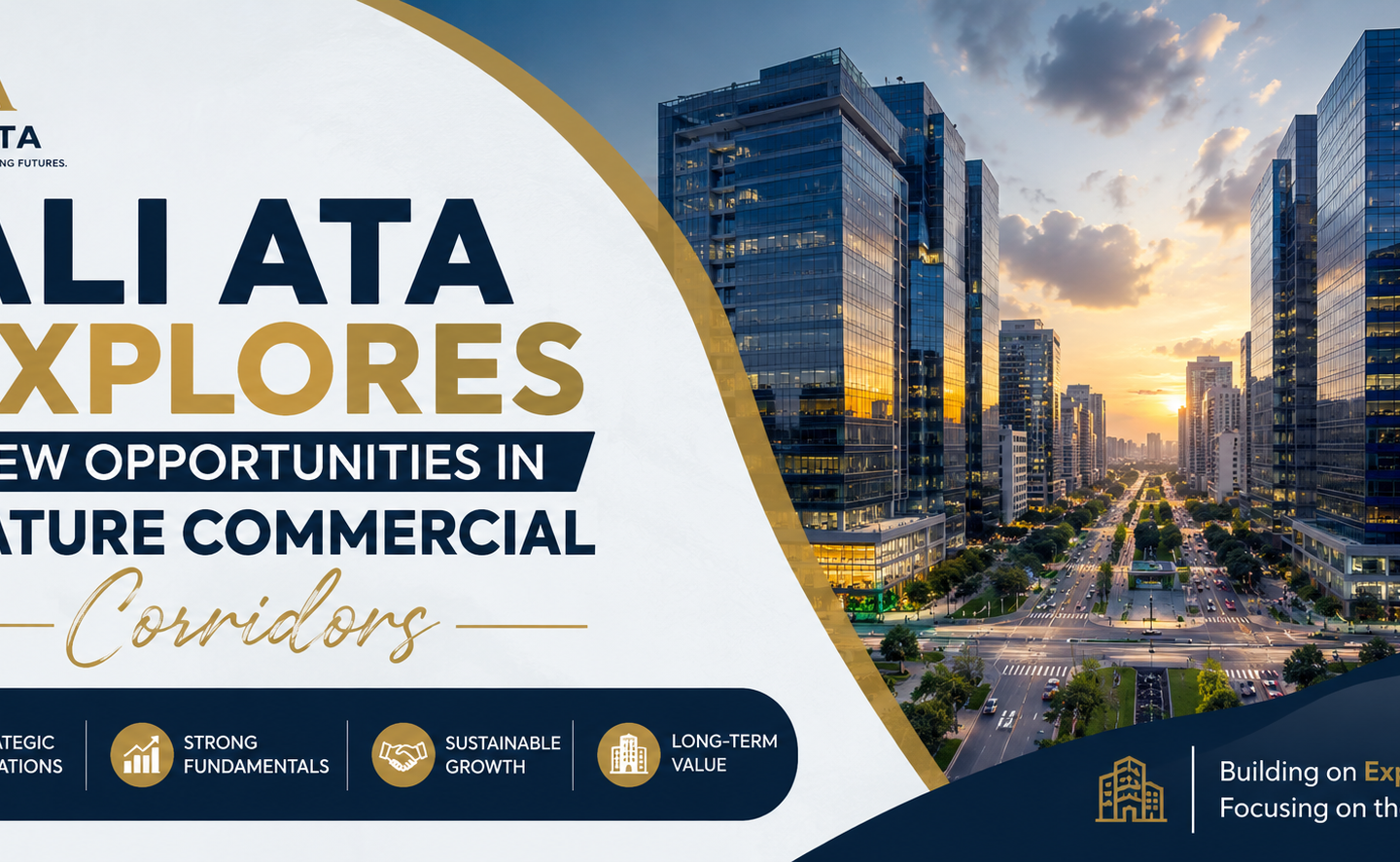
Mature commercial corridors often appear fully developed. However, according to Ali Ata, their visible stability can conceal overlooked investment opportunities. These areas usually have established roads, utilities, customer networks, and transport links. They also have existing businesses and regular pedestrian movement. Therefore, investment does not always require the creation of an entirely new commercial district. Instead, greater value can emerge through the careful revitalization of underused properties and spaces.
A niche opportunity lies in second-generation commercial properties. These are buildings that have previously supported retail, offices, services, or other commercial activities. Such properties may appear outdated, but their locations can remain highly valuable. Consequently, investors can focus on improving the existing asset rather than acquiring undeveloped land.
Several factors can make these properties attractive:
- Underused upper floors: Many mature corridors have active ground-floor shops but poorly occupied upper levels. These spaces can be converted into offices, studios, clinics, small businesses, or other compatible uses. Such conversion can increase the income generated by an existing building. It can also strengthen activity beyond normal retail hours.
- Vacant or outdated storefronts: Older storefronts may lose tenants because of poor layouts, limited accessibility, or weak visual appeal. However, modest improvements can make them suitable for modern businesses. Better lighting, signage, entrances, and interior layouts can therefore improve their commercial performance without requiring complete redevelopment.
- Transit and pedestrian advantages: Established corridors often benefit from transport infrastructure that newer commercial areas lack. Frequent buses, railway stations, pedestrian routes, and nearby residential areas can provide a stable customer base. Investors can therefore identify properties where physical improvements can better connect existing demand with available commercial space.
- Mixed-use conversion: Some mature properties can support a combination of retail, offices, services, and residential uses. This approach can create activity throughout the day. It can also reduce dependence on a single commercial function. However, such conversions should follow local planning regulations and the existing character of the corridor.
- Small-scale property assembly: Individual properties may appear too small to attract major investment. Yet, adjacent properties can sometimes be combined into a larger development opportunity. This approach can improve efficiency while preserving the established commercial location. It can also create opportunities for new formats that would not fit within a single older building.
The strongest opportunities are often found where physical decline exists alongside continued demand. A corridor may have aging buildings, vacant units, and inefficient layouts, while still benefiting from a strong customer base. According to Ali Ata, this combination can indicate an investment gap rather than a failing market. Investors can identify such gaps by examining vacancy rates, rental trends, pedestrian activity, property conditions, and changes in local demographics.
Revitalization should also consider the wider commercial ecosystem. A single renovated property may have limited impact if surrounding buildings remain neglected. Therefore, coordinated improvements can produce stronger results. Streetscape upgrades, improved public spaces, better accessibility, and complementary businesses can increase the attractiveness of the entire corridor. As a result, individual investments can benefit from broader area-wide revitalization.
Continue in this orbit: Winning Big: How to Pitch Commercial Advertising Clients Article
Another important consideration is the balance between modernization and continuity. Mature corridors often possess established identities that attract customers. Excessive redevelopment can remove these characteristics and weaken local demand. Investors should therefore preserve valuable architectural features, established businesses, and recognizable commercial patterns where practical.
Ultimately, mature commercial corridors should not be judged only by their age or appearance. Their existing infrastructure, customer networks, and strategic locations can provide significant advantages, as per Ali Ata. When overlooked properties are carefully repositioned, they can generate new economic value without requiring complete urban reconstruction. Thus, the most promising investment may not always be found in a new development zone. It may instead be hidden within an established corridor that already possesses the foundations for its next phase of growth.
Continue in this orbit: Understanding the Hidden Utility Work That Keeps Modern Properties Running