Key Takeaways
- Clear grade targets reduce guesswork and help operators make productive passes.
- Small setup errors can create overdigging, added fill, extra hauling, and repeat work.
- Consistent communication among operators, survey staff, and site leadership leads to better results.
- Grade monitoring can reduce unnecessary stops while preserving manual verification for critical work.
- Technology delivers the most value when it is paired with sound planning, calibration, and operator training.
Grade work is often where a productive earthmoving operation either gains momentum or loses it. Every trench bottom, building pad, drainage feature, and transition has to meet the design intent before the next trade can proceed. When crews must repeatedly stop, wait for a measurement, and make corrective passes, schedule pressure can build quickly.
For contractors evaluating an excavator grade monitoring system, Excavision offers grade-control systems with wireless sensors for excavators, backhoes, bulldozers, scrapers, and drills. Based in Orlando, Florida, Excavision has focused on grade control since 1992, making it a relevant option for contractors who want a practical system that can move between earthmoving machines and support day-to-day excavation work.
Why Grade Work Slows Down
Earthmoving crews rarely lose time for only one reason. An operator may be working from an unclear reference, an outdated plan, a misaligned benchmark, or a site that differs from the original layout. Visibility can be limited by weather, soil conditions, traffic, structures, or other equipment. A machine may also be capable of moving material quickly, but still require repeated checks before it reaches the final grade.
Continue in this orbit: The Difficult Decisions That Shape a Company’s Future
Small errors can spread. A trench dug slightly too deep may require fill and compaction before pipework begins. A pad left high may delay the next operation. A missed slope at a drainage tie-in can create a correction that affects adjacent work. The objective is not simply fast digging. It is a steady production that stays close to the target and minimizes corrections.
The Cost Of Rework On Earthmoving Projects
Rework consumes resources that the original plan did not intend to use. Overdigging can mean additional aggregate, fill placement, compaction, hauling, fuel, and machine hours. Under-digging may require another excavation pass before a utility crew, concrete crew, or inspector can move forward. Incorrect slopes can also cause drainage concerns that are easier to address before backfilling or finishing begins.
Continue in this orbit: How GST Affects Term Insurance Premiums: A Calculator Breakdown
Manual checks remain valuable, particularly at critical points, but sending workers back and forth for every routine measurement can pull them away from layout, finishing, safety support, or other high-priority tasks. Better information helps the crew work more efficiently, but it does not replace engineering judgment, approved plans, or field verification.
Build A Stronger Field Workflow
A dependable grade process begins before the first bucket enters the ground. The following workflow gives crews a repeatable starting point:
Continue in this orbit: How to Choose the Right Vehicle for Your Budget and Daily Life
- Confirm the design. Review elevations, slopes, offsets, limits of work, and required tolerances.
- Set reliable references. Confirm that benchmarks and field control match the current approved information.
- Inspect the machine. Check the attachment, linkage, sensors, display, and any components that affect readings.
- Run a short test. Compare the system reading with a known point or an independent field measurement.
- Work in controlled passes. Leave room for adjustment as the machine approaches the finished grade.
- Verify critical areas. Check corners, utility crossings, transitions, drainage points, and tie-ins before the work is covered.
Where Grade Monitoring Tools Fit
Grade tools can support different workflow levels. Manual measurements are useful for confirmation, but they can interrupt production when used for every decision. In-cab indicators can show depth, height, or slope information while the operator works. Machine guidance can help an operator follow a design target with fewer physical reference points, while machine control may assist equipment movement when the machine, design data, and project conditions support that approach.
In civil construction, machine control commonly refers to the use of digital design information and positioning technology to guide earthmoving equipment. The appropriate level of technology depends on the work, site conditions, operator experience, tolerance requirements, and the crew’s ability to maintain accurate references.
What To Check Before Choosing A System
Contractors comparing grade monitoring options should focus on practical fit rather than features alone.
Continue in this orbit: Knowing When It’s Time to Step Away From a Business
- Machine compatibility: Confirm that the system is compatible with the fleet’s excavators, dozers, backhoes, and other machines.
- Installation and transfer time: Consider how easily the equipment can be moved without extended downtime.
- Display clarity: Operators need information that is easy to read and does not distract from the work area.
- Sensor durability: Components should be suitable for vibration, dust, moisture, and routine jobsite use.
- Calibration process: The crew should understand how to verify and correct readings in the field.
- Training and support: Account for setup help, service access, replacement parts, and operator instruction.
Train Operators For Consistent Results
Even a well-matched system depends on the person in the cab. Training works best as a short, repeatable process rather than a one-time demonstration. Operators should practice confirming reference points, interpreting depth and slope information, and recognizing readings that do not match field conditions. A simple trench, pad, or slope gives crews a lower-risk setting to build confidence before they use the system on critical production work.
Supervisors should also establish a clear process for reporting damaged components, unusual readings, or design changes. Reviewing completed work against the plan helps the team identify whether a problem began with setup, communication, machine condition, or operating technique.
Continue in this orbit: 6 Industrial Equipment Partners That Help Keep Farm And Plant Motor Systems Running
A Practical Jobsite Example
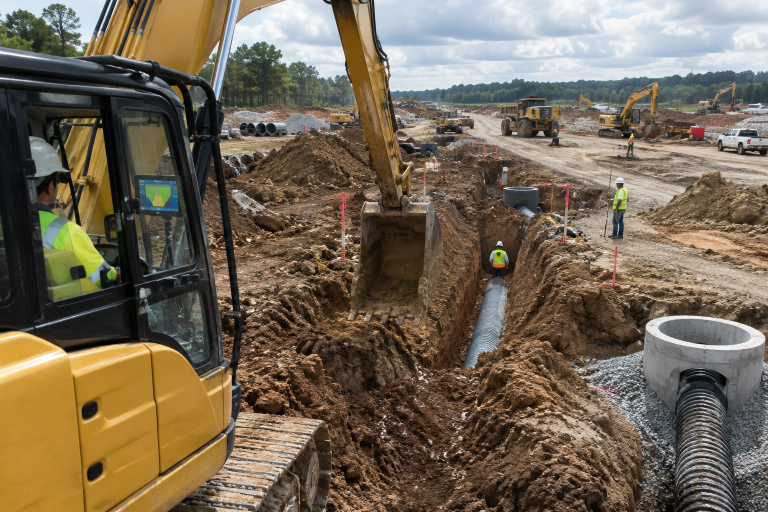
Consider a crew excavating a utility trench with changing depths and several crossings. With manual checks alone, the operator may pause frequently while another worker measures the bottom. Adding in-cab grade information can help the operator stay oriented to the planned elevation during routine digging, while the crew reserves manual checks for crossings, transitions, and final acceptance points.
This approach does not guarantee a particular outcome, but it can reduce avoidable waiting and reveal potential issues before the trench is backfilled. A recent grade control case study describes how a contractor used GNSS-enabled equipment and digital models to support trenching, drainage, and material-management work.
2026 Grade Control Checklist
- Is the crew using the latest approved design information?
- Has the benchmark or control reference been checked?
- Has the machine and its grade equipment been inspected and calibrated?
- Can the operator view the display without losing awareness of the work area?
- Are grade tolerances understood by the full crew?
- Will critical areas receive final independent verification?
- Has the team planned for obstructions, tree cover, poor visibility, and other site limitations?
- Have lessons from the job been recorded for the next project?
Final Thoughts
Better-grade work comes from accurate plans, dependable references, trained operators, disciplined checks, and technology suited to the work. In 2026, contractors do not need every available feature to improve results. They need a workflow that helps machines stay on target, reduces repeat work, and keeps the entire crew moving toward the next phase of the project.