Most people don’t think about their home’s water until something changes. The shower suddenly leaves white spots on the glass. A faucet develops a reddish stain. Coffee tastes slightly different. Maybe the water has an odor you can’t quite describe.
These signs don’t automatically mean there’s a serious problem. But they can be useful clues.
Continue in this orbit: Better Water Begins With Knowing What Your Home Actually Needs
Water quality is affected by many things, including the source, local geology, plumbing, treatment equipment, and even seasonal changes. That’s why choosing a water-treatment system shouldn’t begin with a sales brochure. It should begin with understanding your water.
Once you know what you’re dealing with, the rest becomes much easier.
Continue in this orbit: The Smartest Water Upgrade Begins With Knowing What’s Really in It
Why Testing Your Water Is the First Step
A clear glass of water can still contain dissolved minerals or other substances that you can’t see. Appearance alone tells you very little.
Water Testing can provide a much clearer picture. Depending on your water source and concerns, testing may examine hardness, pH, iron, manganese, chlorine, sediment, bacteria, nitrates, or other parameters.
For private well owners, testing is especially useful because groundwater characteristics can vary significantly from one property to another. Even if your water has always seemed fine, changes in the well or surrounding environment can alter its quality.
Continue in this orbit: Choosing the Right Water Treatment System for Everyday Comfort
Testing doesn’t mean something is wrong. Think of it more like checking the oil in your car. You do it because knowing what’s happening is better than guessing.
Hard Water Is More Than an Annoyance
Hard water is common and generally isn’t considered a health problem at typical levels, but it can be a nuisance around the house.
Continue in this orbit: Why Clean, Reliable Water Is One of the Smartest Investments a Business Can Make
Calcium and magnesium can leave scale on showerheads, faucets, dishes, and appliances. Soap may lather differently, and cleaning mineral deposits can become a regular chore.
Over time, scale can also accumulate inside water heaters and other equipment that regularly uses water.
Continue in this orbit: Better Water at Home Starts with the Right Kind of Balance
If hardness is the main issue, a properly sized water softener may help reduce those effects. The important word here is “properly.” A system should match your actual water hardness and household usage.
Choosing the Right Treatment Technology
There isn’t one treatment system that removes everything.
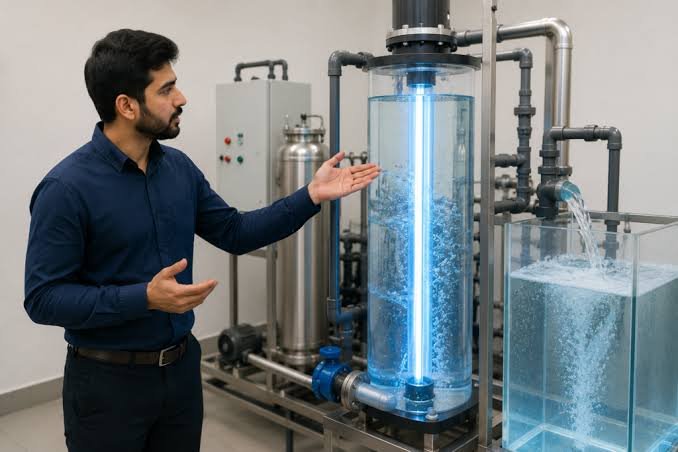
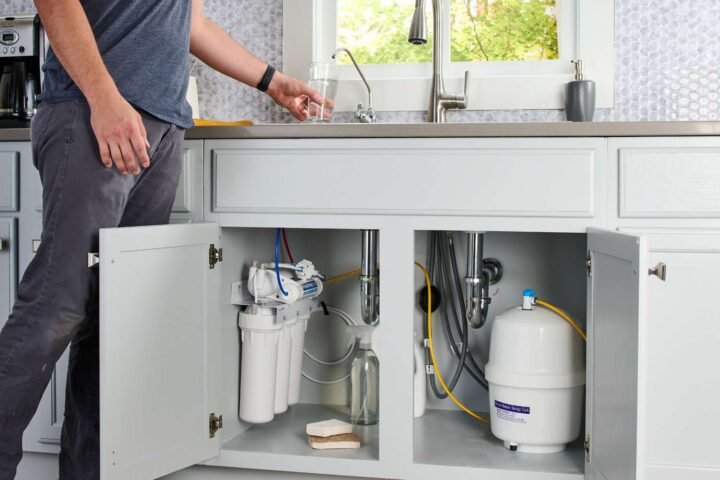
Activated carbon filtration is commonly used to improve taste and reduce chlorine. Water softeners address hardness minerals. Reverse osmosis systems can provide more intensive treatment for drinking water. Ultraviolet systems may be used for microbial disinfection in appropriate applications.
The right combination depends on your test results.
This is where homeowners sometimes get caught up in marketing. A system can have dozens of features and still be the wrong choice for your water.
Instead of asking, “What’s the most advanced system available?” ask, “What does my water actually need?”
That’s a much better question.
Why Professional Installation Matters
Buying good equipment is only part of the job. Installation can have a major impact on how well the system performs.
Incorrect connections, poor drainage, improper sizing, or unsuitable installation locations can create problems that have nothing to do with the filtration technology itself.
That’s why Professional Installation & Service can be valuable, particularly for whole-home systems or equipment that requires electrical connections, drainage, programming, or multiple treatment stages.
A qualified installer should understand your plumbing layout and know how the equipment is intended to operate.
And ideally, they should explain the system to you before leaving. You shouldn’t have to stare at a control panel wondering what the blinking light means.
Think About Maintenance Before You Buy
Every treatment system has some kind of maintenance requirement.
Filters need replacement. Water softeners require salt or other consumables depending on the technology. UV systems have lamps that need periodic replacement. Reverse osmosis systems require filter and membrane changes.
Before purchasing, ask for a realistic maintenance schedule.
How often are filters replaced? What do replacement parts cost? Can you buy them locally? Does the manufacturer recommend professional servicing?
These questions may seem boring during the sales process, but they’ll matter later.
Long-Term Reliability Is More Than a Warranty
A long warranty sounds reassuring, but it isn’t the only thing that determines whether a system is dependable.
long-term reliability also depends on component quality, proper installation, regular maintenance, replacement-part availability, and whether the system is correctly sized for your household.
Imagine installing an excellent filtration unit only to discover two years later that replacement cartridges are difficult to find. That’s not particularly helpful.
When comparing systems, look at the whole ownership experience. A slightly higher upfront cost may be worthwhile if the equipment is durable, easy to maintain, and supported by a dependable service network.
Don’t Ignore Water Pressure
Water treatment equipment can affect flow.
Whole-home systems, especially those with multiple filtration stages, create some resistance as water passes through the media. If the system isn’t appropriately sized, you may notice reduced pressure when several fixtures are being used.
This is particularly important for larger households.
Ask about flow rate and pressure requirements before installation. A professional assessment can help determine whether the system can meet your home’s peak demand.
Nobody wants to discover the problem when someone is taking a shower and the dishwasher suddenly starts running.
Consider the Total Cost of Ownership
The initial price is only one part of the equation.
Think about installation, replacement filters, salt, electricity, servicing, repairs, and eventual equipment replacement.
A cheap system isn’t necessarily inexpensive over ten years. Likewise, the most expensive system isn’t automatically the best investment.
Look at what you’ll actually spend over time and whether the system solves the problem you care about.
That approach usually produces a more realistic comparison.
When Professional Help Makes Sense
Some simple countertop or faucet filters are easy enough for homeowners to install themselves.
More complicated systems are different.
If you’re dealing with whole-home filtration, water softening, UV disinfection, reverse osmosis, or unusual water chemistry, professional guidance can prevent expensive mistakes.
A good provider should be willing to explain the test results, treatment options, expected maintenance, and limitations of the equipment.
Be cautious if someone immediately recommends expensive equipment without asking anything about your water.
Making a Smarter Water-Treatment Decision
Choosing a water-treatment system doesn’t need to be overwhelming.
Start with testing. Identify the actual problem. Research the technology designed to address it. Compare installation, maintenance, operating costs, and long-term support.
Most importantly, don’t buy based on fear or exaggerated promises.
Your water may need treatment—or it may simply need a small adjustment. The only reliable way to know is to understand what’s happening first.
When the right system is properly installed and maintained, the benefits can become wonderfully ordinary: cleaner fixtures, fewer mineral deposits, better-tasting water, and fewer surprises.
That’s really the goal. Not a complicated piece of equipment sitting in your home, but dependable water that quietly does what you expect it to do, day after day.