Key Takeaways
- Afro-Cuban dance music draws its momentum from interlocking percussion, syncopation, and a dependable pulse.
- Jazz harmony adds color, tension, release, and opportunities for musicians to answer one another.
- Clave is not simply a percussion figure. It can organize phrasing across the entire arrangement.
- Modern production can expand the sound without replacing the human interaction that makes a groove persuasive.
- Effective fusion requires study, listening, and respect for the traditions involved.
Why This Sound Still Moves People
Dance music has to succeed in two places at once: in the body and in the ear. The body needs a pulse that feels stable enough to trust, while the ear wants contrast, surprise, melody, and color. That balance is central to contemporary Afro Cuban dance music, where rhythm creates forward motion and harmony keeps the listener curious.
Jazz harmony and Afro-Cuban rhythm are especially powerful together because neither needs to flatten the other. A band can maintain a clear dance groove while using extended chords, responsive horn lines, and concise improvisation. The goal is not to make rhythm “more sophisticated” with jazz or make jazz “more exciting” with percussion. It is to let each musical language do its job.
Start With the Rhythm
The Role of Clave
Clave is a repeating rhythmic framework that helps musicians place accents, phrases, and changes in relation to one another. In many Afro-Cuban styles, it functions as an organizing principle rather than a part that must always be played loudly. A musician studying clave as a rhythmic concept will hear how the pattern can influence bass movement, piano figures, vocal phrasing, and horn attacks.
For arrangers, the practical lesson is simple: decide where the rhythmic center is before adding detail. A melody that lands convincingly against the clave can feel direct and memorable. A fill or chord hit that fights that framework may sound awkward even when every individual musician plays it cleanly.
Continue in this orbit: Slow Burn vs. Fast Forward: Why Old School Dating Styles Still Win the Long Game
Layered Percussion and Forward Motion
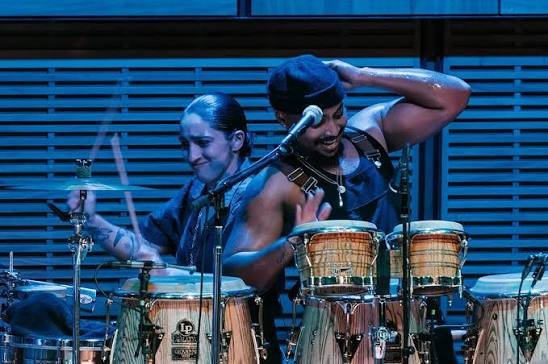
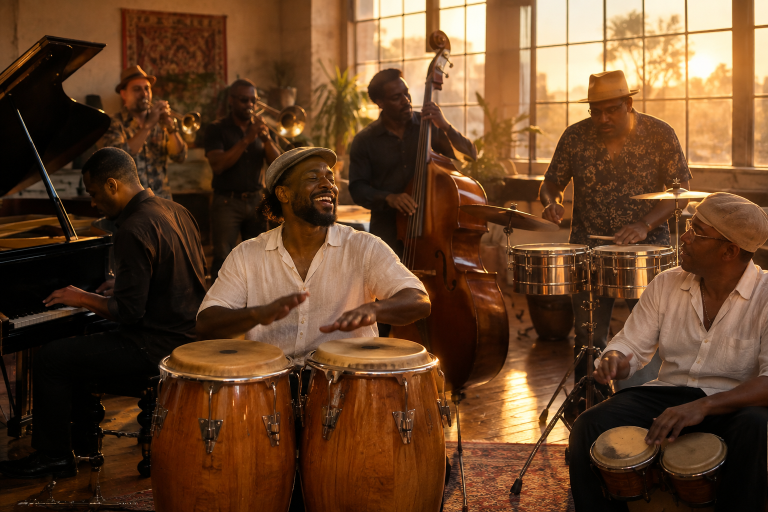
Congas, bongos, timbales, cowbells, shakers, and hand percussion can each occupy a different role. One part may state a recurring pattern, another may mark transitions, and another may add small variations that raise the energy. The groove feels wide because the parts interlock rather than duplicate one another.
A strong bass line makes this layering easier to hear. It can provide a grounded, repeating figure beneath more active percussion, connecting the rhythmic foundation to the harmony without overcrowding the low end. When the bass, percussion, and piano agree on where the pulse lives, the whole band can take greater risks above them.
Continue in this orbit: Finding the Beauty in Intimate Gatherings and Simple Beachside Celebrations
What Jazz Harmony Adds
Color Beyond Basic Chords
Jazz harmony gives dance arrangements more than a sequence of major and minor triads. Seventh chords, ninths, altered tones, passing chords, and brief substitutions can create motion between sections. A pianist or guitarist can use these colors in short, syncopated patterns rather than long blocks of sound, preserving room for percussion and vocals.
The key is proportion. If every measure introduces a dense new chord, dancers may lose the sense of arrival and repetition that makes a groove satisfying. Rich harmony works best when it supports the pulse, then clears space for a strong melodic or rhythmic answer.
Continue in this orbit: Driving for Every Stage of Life: Finding the Training That Fits Your Needs
Space for Improvisation
Jazz also contributes to conversation. A trumpet phrase can be answered by piano, a vocalist can leave space for a percussion response, and horns can build short call-and-response figures around a chorus. Improvisation does not mean abandoning structure. The form, groove, and planned return to the main theme give soloists boundaries that make their choices meaningful.
A Short Historical Thread
Afro-Cuban jazz developed through sustained exchange among Cuban, Caribbean, and U.S. musicians, particularly in New York. Arranger and bandleader Mario Bauzá helped bring Cuban rhythmic approaches into jazz big-band settings, creating an influential model for combining Afro-Cuban rhythm, jazz arranging, and improvised solos.
This history is not a one-way story of one tradition borrowing from another. Dance orchestras, big bands, son, rumba, mambo, bebop, migration, recording sessions, and shared stages all shaped the music. That collaborative history remains important because it reminds modern artists to treat the style as a living practice, not a collection of decorative sounds.
Continue in this orbit: How to Choose the Right Vehicle for Your Budget and Daily Life
How the Parts Fit Together in a Modern Arrangement
- Set the pulse: Choose a tempo and rhythmic feel that performers and dancers can hold onto.
- Place the clave: Let it guide the relationship between melody, bass, piano, and percussion.
- Build the bass part: Write a line that supports both the percussion pattern and chord movement.
- Add piano or guitar: Use montuno-inspired figures, comping patterns, or syncopated responses.
- Write a clear theme: Give listeners a melody they can recognize when it returns.
- Shape the horns: Combine unison melodies, harmonized phrases, and rhythmic punches.
- Plan the solo section: Define its length and create a convincing path back to the main material.
- Remove what is unnecessary: Space often makes the rhythmic idea feel larger.
Let the Dance Floor Guide the Arrangement
A dance-oriented arrangement needs clear timing and changes that people can feel. Contrast is useful: reducing the texture before a chorus, percussion break, or horn entrance can make the next lift more dramatic. A sophisticated bridge may briefly move through unexpected chords, but returning to a simpler rhythmic figure gives the audience a familiar place to land.
This does not require avoiding complexity. It requires placing complexity where it strengthens anticipation rather than obscuring the beat. A listener does not need to name an altered dominant chord to feel its tension resolve into a chorus.
Continue in this orbit: Chennai Moves: Sticky Afternoons, Stair Marathons and a Sewing Machine That Outlived Everyone
Modern Production Choices
Live Players and Digital Tools
Programmed percussion can help a producer sketch an arrangement, test sounds, and build a precise foundation. Live players bring micro-variations in timing, touch, volume, and response that can make a groove breathe. Both approaches can work when the production serves the rhythmic logic of the song.
Recording for Clarity
Give each percussion voice enough room to be heard, and manage the low frequencies so bass and kick do not mask one another. Avoid editing every small timing difference out of a performance. Controlled variation can be part of what makes an ensemble sound human, connected, and ready for movement.
Common Mistakes to Avoid
- Using rhythm as decoration: Adding a few percussion sounds is not the same as building an interlocking rhythmic language.
- Ignoring the rhythmic center: Busy parts can still feel disconnected when their accents do not relate clearly.
- Overloading the arrangement: Excessive fills, chords, and effects can hide the groove.
- Copying surface details: Instruments and patterns need cultural and musical context.
- Forgetting the dancer: Harmonic ambition should not make the pulse difficult to follow.
A Practical Listening Checklist
Listen to a recording several times, focusing on one element during each pass. Ask where the main pulse sits, which instrument suggests the clave, how the bass connects to percussion, when harmony creates tension, and how horns respond to the rhythm section. Notice what changes during a solo and how the main theme returns. This kind of focused listening turns musical admiration into usable arranging knowledge.
Conclusion: Keep the Groove Clear and the Ideas Open
Afro-Cuban rhythm gives dance music movement, while jazz harmony gives it room to speak, surprise, and respond. The most convincing modern fusion does not depend on piling up influences. It depends on clear pulse, thoughtful arrangement, attentive listening, and respect for the musicians and traditions that made the conversation possible. Whether composing, producing, performing, or dancing, begin with the groove and let every added idea earn its place.