Water looks simple enough. Turn on the tap, fill a glass, and that’s usually the end of the thought. But if you live in an area with hard water, there’s a lot more happening beneath the surface. Minerals carried through the water supply can gradually affect plumbing, fixtures, kitchen appliances, bathrooms, and even the way freshly washed clothes feel.
Hard water isn’t usually an immediate household emergency. That’s part of the problem. Its effects tend to build slowly, often going unnoticed until faucets become crusty, showerheads lose pressure, or an appliance starts behaving differently. Understanding what hard water does can help homeowners make smarter decisions before small annoyances turn into expensive repairs.
Continue in this orbit: Better Water at Home Starts with Understanding What’s Really in It
What Makes Water Hard?
Hard water contains naturally occurring minerals, mainly calcium and magnesium, that dissolve into groundwater as it moves through soil and rock. The amount varies considerably from one location to another. Some homes may have mildly hard water, while others deal with much higher mineral concentrations.
In everyday life, you might notice hard water through white spots on dishes, cloudy-looking glassware, soap that doesn’t lather easily, or dry-feeling skin after a shower. None of these signs necessarily mean the water is unsafe to drink. Hardness itself is generally considered a water-quality nuisance rather than a health concern.
Still, nuisance doesn’t mean harmless to your home.
When mineral-rich water is repeatedly heated or evaporated, those minerals can remain behind. Over time, that residue becomes increasingly difficult to ignore.
Continue in this orbit: Why the Water in Your Home Deserves More Attention Than You Think
The Trouble With Mineral Deposits
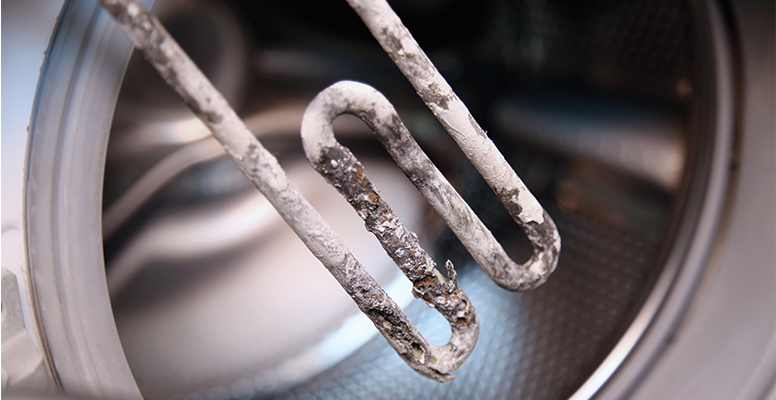
One of the most recognizable effects of hard water is scale buildup. It often appears as a chalky white or off-white coating around faucets, showerheads, sinks, coffee makers, kettles, and other water-contact surfaces.
Inside pipes and appliances, however, deposits aren’t always visible. Minerals can accumulate along internal components and narrow passages. You may not notice anything until water flow becomes weaker or an appliance takes longer to perform a normal cycle.
Bathrooms are especially good at revealing the problem. A freshly cleaned shower can look spotless, yet those stubborn marks return surprisingly quickly. You scrub them away, only to find them back again a few days later. It can feel like you’re losing an argument with your own bathroom.
Continue in this orbit: Better Water Begins With Knowing What Your Home Actually Needs
The issue isn’t just cosmetic. Persistent deposits can make cleaning more difficult and may gradually affect equipment that relies on steady water flow and heat transfer.
Why Appliances May Work Harder
Many household appliances depend on water and heat. Dishwashers, washing machines, water heaters, coffee makers, humidifiers, and similar equipment all contain components that come into regular contact with water.
Continue in this orbit: The Home Feels Different When the Water Works Better
When mineral deposits collect around heating elements or internal surfaces, heat may not transfer as efficiently. The appliance can still work, of course, but it may need more time or energy to accomplish the same task.
This is where reduced appliance efficiency can become a practical concern. A homeowner might not immediately connect a higher energy bill or longer heating cycle with water hardness. Yet mineral deposits can interfere with the normal operation of equipment, particularly when the problem has been allowed to develop for years.
Water heaters deserve special attention. Sediment and mineral accumulation around heating elements can affect heating performance and may contribute to unusual noises or longer recovery times. Regular maintenance can help, but addressing the underlying water conditions may be worth considering too.
Continue in this orbit: Clean Water at Home Is One of Those Little Things That Changes Everything
Plumbing Can Feel the Effects, Too
Your plumbing system is constantly exposed to the water entering your home. While hard water doesn’t automatically mean pipes will fail, mineral deposits can become an unwelcome addition to an aging system.
Faucet aerators may become clogged. Showerheads can lose their spray quality. Valves and fixtures may become harder to operate. In severe situations, deposits can contribute to restricted water flow.
This is particularly frustrating because the change is gradual. You don’t wake up one morning and suddenly have a completely blocked pipe. Instead, the shower pressure gets a little weaker. A faucet starts behaving strangely. Cleaning becomes more frequent. Eventually, you realize something has changed.
That gradual nature is why paying attention to early signs matters.
Hard Water and Everyday Cleaning
There’s another side of the problem that homeowners often notice first: cleaning.
Hard water can make soap and detergent less effective because minerals interact with cleaning agents. You may find yourself using more product to get the result you expect. Glasses can come out of the dishwasher covered in spots, while bathroom surfaces seem to develop a film almost immediately after cleaning.
Laundry can be affected as well. Clothes may feel less soft, colors can appear dull over time, and detergent residue may become more noticeable. It’s not necessarily that your washing machine is doing a poor job. The water itself may be making the job harder.
A water softener can help in homes where hardness is significant. Unlike a basic filter, a traditional softener is specifically designed to reduce hardness minerals through an ion-exchange process. The right approach depends on the actual water chemistry, though, so testing first is a sensible move.
Should Every Home Have a Water Softener?
Not necessarily. There isn’t one universal answer.
The best solution depends on your water source, hardness level, household size, plumbing setup, budget, and what you’re trying to solve. Some households may benefit from a whole-home softening system, while others may prefer targeted treatment for drinking water or specific appliances.
If you use well water, testing becomes particularly useful because the water chemistry can vary widely. Even municipal water can contain hardness levels that cause noticeable scaling.
A professional water analysis can identify hardness and other factors that might influence which treatment method makes sense. That’s much better than buying a system based solely on a salesperson’s promise or a dramatic-looking online advertisement.
A Practical Approach to Hard Water
If you’re noticing white deposits, frequent fixture cleaning, poor soap performance, or changes in appliance operation, don’t automatically assume you need to replace everything.
Start with a water test. Find out what you’re actually dealing with.
Then consider the source of the problem rather than treating each symptom separately. Descaling a showerhead may improve water flow today, but it won’t prevent new deposits from forming. Replacing an appliance might solve one problem temporarily, but it doesn’t change the water entering the home.
Maintenance still matters, even with treatment. Appliances should be cleaned according to manufacturer recommendations, fixtures should be checked periodically, and filters or softener components should be serviced when required.
Looking Beyond the White Spots
Hard water is one of those household issues that’s easy to dismiss because its effects aren’t usually dramatic at first. A few spots on a faucet don’t seem important. A slightly slower shower doesn’t feel urgent.
But small problems have a habit of adding up.
Understanding your water quality gives you a clearer picture of what’s happening throughout the home. With proper testing, sensible maintenance, and the right treatment when needed, homeowners can reduce mineral-related problems and help their plumbing and appliances perform as intended.
The goal isn’t to chase perfectly spotless faucets. It’s simply to make sure the water working its way through your home isn’t quietly creating unnecessary work, expense, and frustration. Sometimes, a little attention to what’s in the water can make a surprisingly big difference.